Solutions
Solutions you can run the business on.
Engineered against your data, your controls, and your systems, then handed over no parallel stack, no dependency on us to keep it running.

New


Engineered against your data, your controls, and your systems, then handed over no parallel stack, no dependency on us to keep it running.
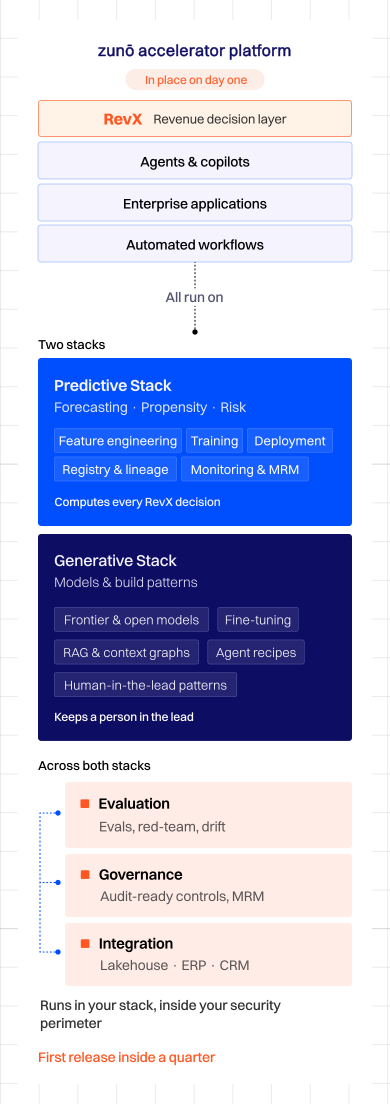
The accelerator platform. A predictive stack for production ML, a generative stack for agents and copilots, and the evaluation, governance and integration both depend on.


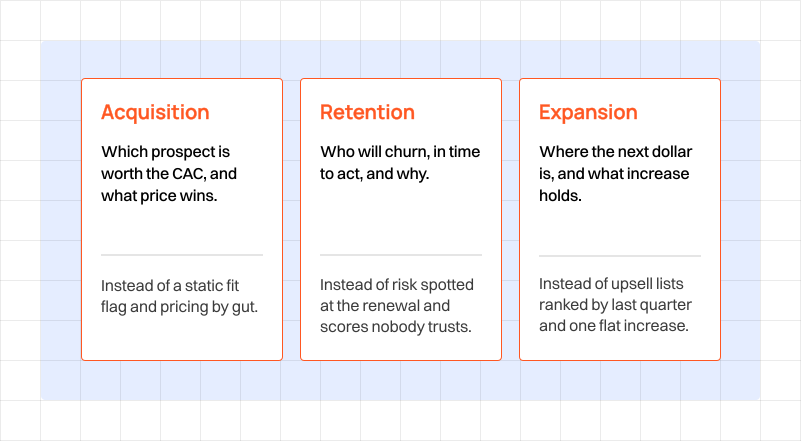
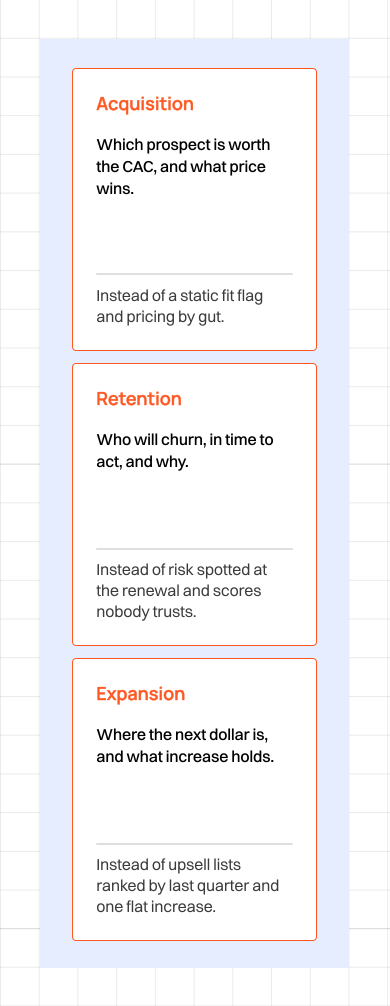
Expected lifetime value from pre-win signals only.
Pricing, positioning and objections, in Slack or Teams.
Cited, human-reviewed answers from your knowledge base.
Horizon-anchored churn scoring with per-account drivers.
Counterfactual propensity, one model per motion.
Per-account elasticity: what increase holds at renewal.
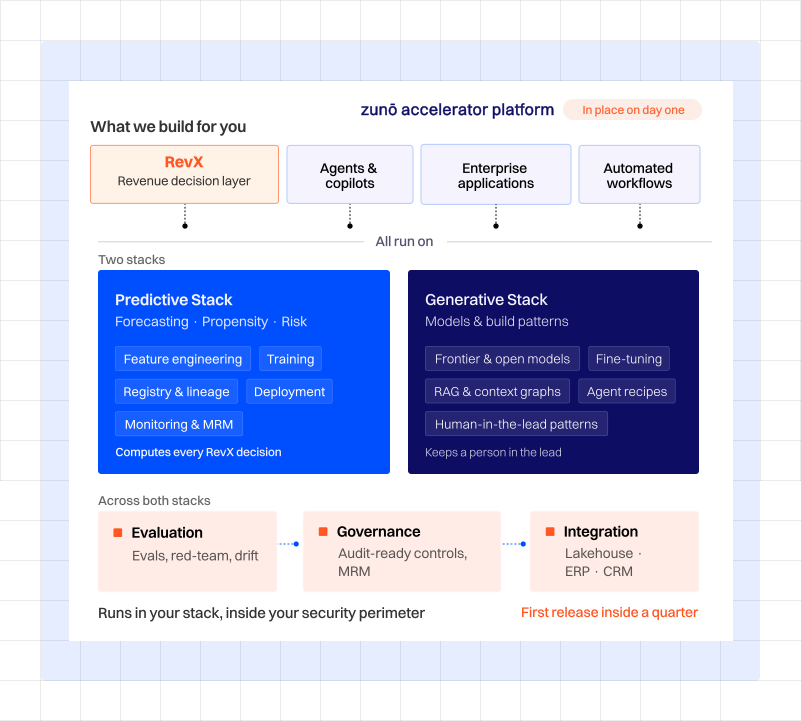
From live customer engagements on the surfaces teams use daily.


A product, delivered like an engagement: the six decisions are pre-built, then computed on a context graph we construct in your warehouse, calibrated to your data and your horizon. Product speed, no parallel stack.
Zunō sits underneath everything we build, RevX included. Start with either a revenue decision or the platform and the other is already compatible, because they're built as one system.
Data readiness isn't a prerequisite; it's the first deliverable. The revenue context graph CRM, product usage, support, finance, calls and intent unified in your warehouse is where every engagement begins.
In your environment: your warehouse, your cloud, behind your identity provider, with traceability from any answer back to the inputs behind it. Engagements end with handoff, not lock-in.
Drift is designed for, not discovered. Calibration and drift reporting are part of the platform, so your team sees model health the way they see any operational metric and if you'd rather we operate it, we stay.