For Enterprises
AI that holds up in production
You run the business. We build AI that fits the way it already works your data, your workflows, your KPIs then stay through operations so the value holds as things change.

New


You run the business. We build AI that fits the way it already works your data, your workflows, your KPIs then stay through operations so the value holds as things change.


Foundation models are extraordinary, and they keep getting better every six weeks. Capability is no longer the constraint, neither is appetite. Most boards have already funded a pilot or three. What stalls the work is everything in between: fragmented data, legacy systems, workflows that were never designed for a probabilistic component, the change management nobody scoped, the policy that hasn’t been written yet.
Cognida was built for that gap. We embed in your organization, design against the constraints you actually have the data as it sits, the systems as they run and engineer the solution end-to-end, the same team from first whiteboard to production.
We design for the operator who has to use it on a Tuesday afternoon.
AI strategy, agents, evals, fine-tuning, data foundations, integration, governance, operations one engagement, one team. We work in your stack, inside your security perimeter, with the audit and human-in-the-lead posture your CISO and your board can sign. And when it runs, we hand it over. Engagements end with handoff, not lock-in.


The reason AI initiatives stall is almost never the model. It’s the handoffs strategy to engineering, data to applications, deployment to operations. AI is built in loops design, eval, tune, again running across data, models, and workflows at once, with proof at every pass. Loops don’t survive vendor boundaries. We built one team so nothing is handed off.
A plan the board can approve and engineers can build against.
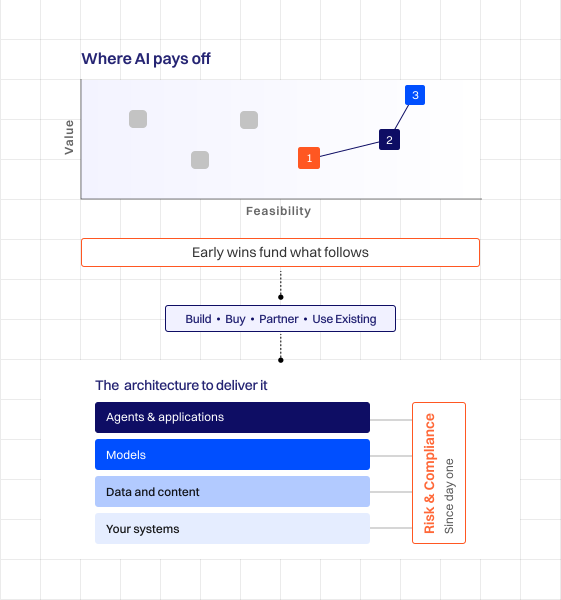
We map where AI pays off in your business, then design the end-to-end architecture to deliver it, grounded in the systems and constraints you run today. Where there are trade-offs, we put them on the table.
.png)
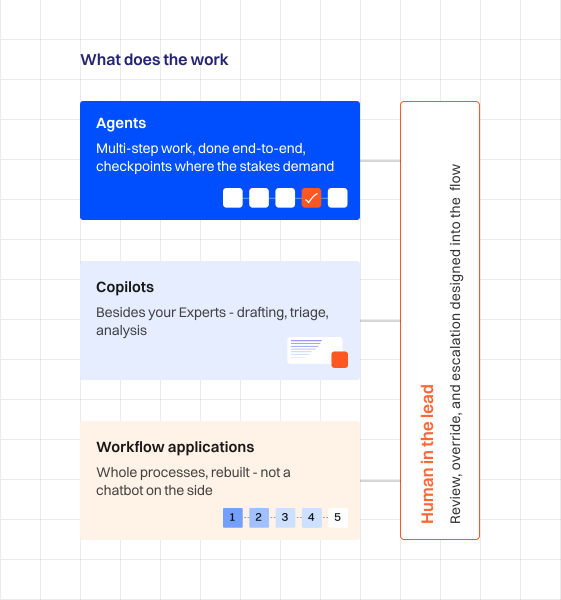
Systems that do the work. Agents that read, decide, and act across your systems. Copilots that work alongside your experts. Applications redesigned around what AI can now carry with humans in the lead where judgment matters.
.png)
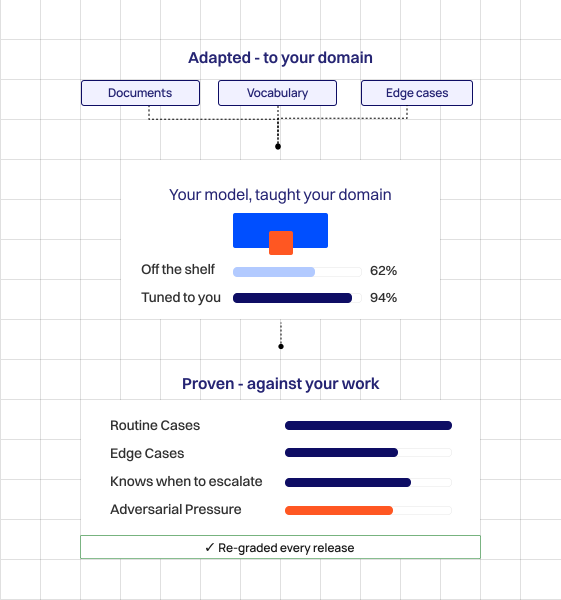
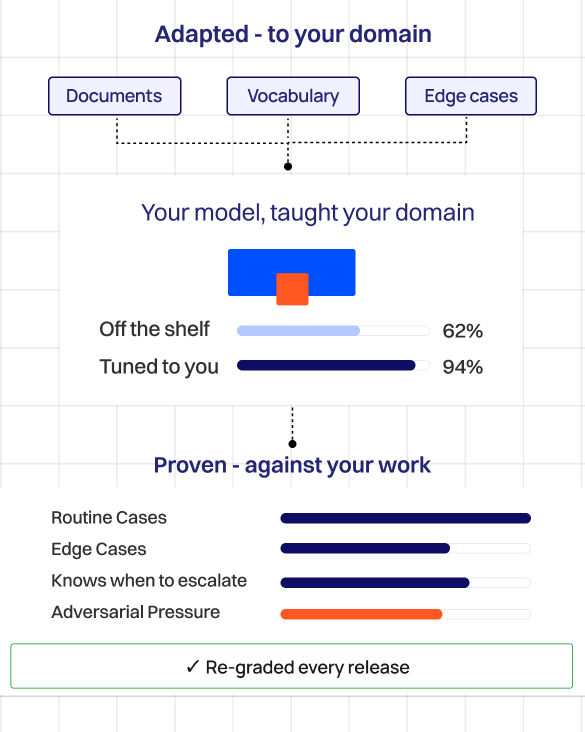
Proven on every release. Adapted to your domain. Evals that measure AI against the work your teams do and catch what a change quietly broke. Fine-tuning that teaches frontier models your business your documents, your vocabulary, your edge cases.
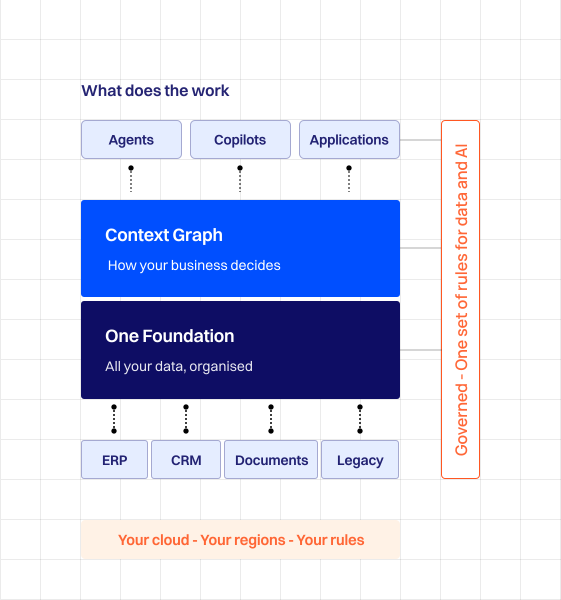
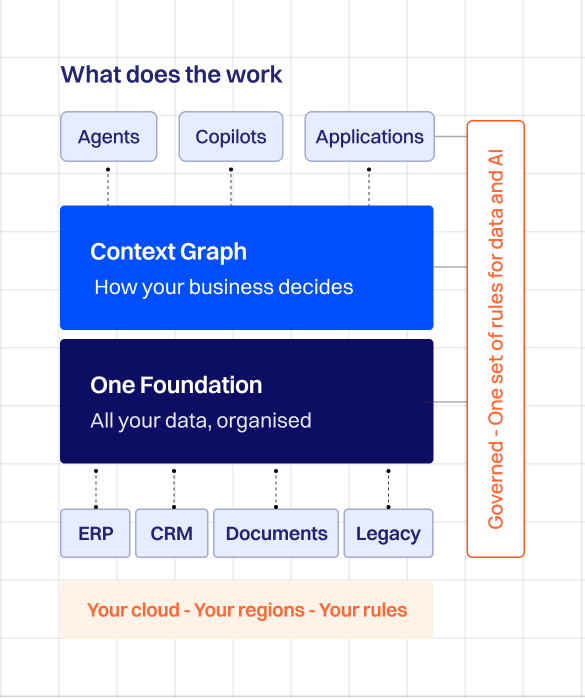
What the model knows, and where it can act. AI runs on context. We build the data foundations that give models clean, governed access to your business and the integrations that let agents read from and write to the systems you run on.
Signed off before it ships. Steady long after. Governance your CISO, your auditors, and your board can stand behind and the operating discipline that keeps AI reliable as models, data, and the business change. We run it with you until your team runs it alone.
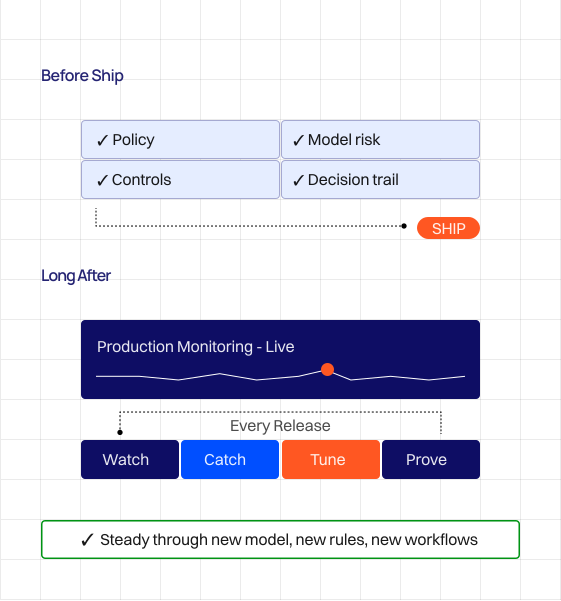
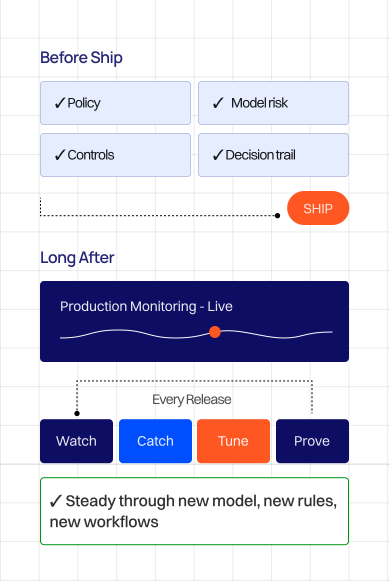
Four stages, one embedded team that’s FDE+. No handoffs between stages, no bench swaps. The people who frame the work design it, build it, and run it. And because Zunō carries the substrate evals, governance, deployment every stage starts with months of work already done.


Boards don’t fund technology for its own sake. They fund results they can see in numbers they already track, such as revenue and the cost of earning it. So every engagement starts by choosing which of the two it will move. And once the work is in production, that is the number we answer to.
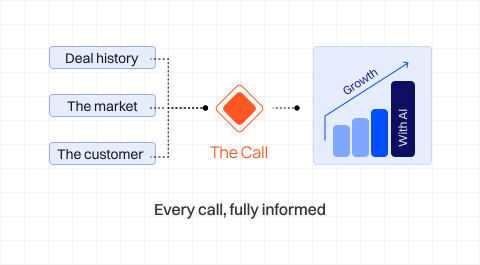
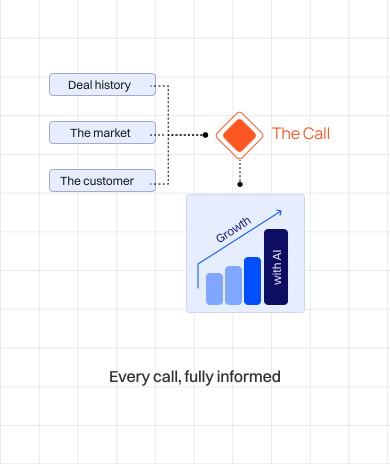
Revenue is a stream of judgment calls what to charge, when to move, what to offer next. Most get made fast, on partial information. AI puts the full picture behind each one: the deal history, the market, the whole customer relationship, right when the call gets made. Growth stops depending on your best people being in the room.
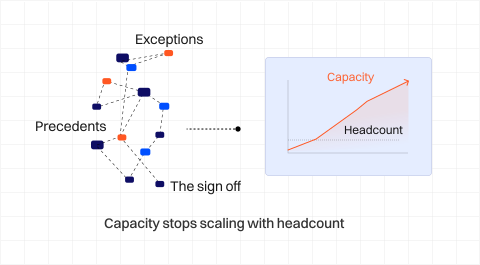
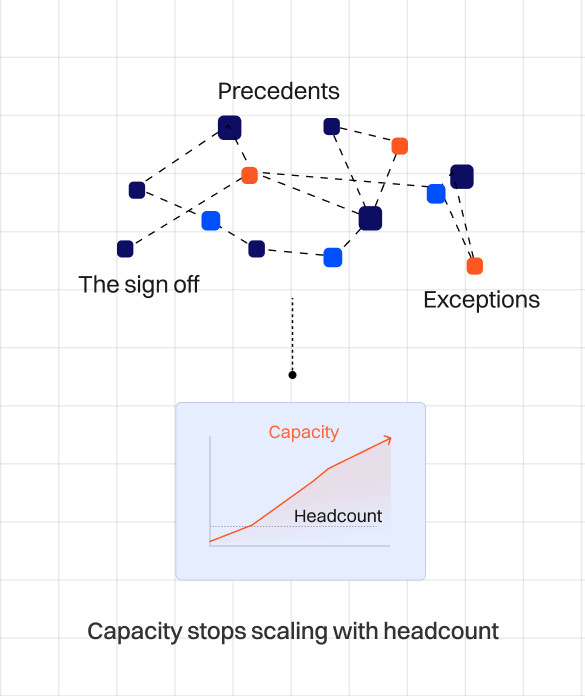
How your business really works is written down nowhere how decisions get made, which exceptions are fine, who signs off on what. We capture it as an enterprise context graph: structure a machine can act on. Then agents can carry whole processes, at any volume. Capacity stops scaling with headcount.

The frame takes two weeks and ends in a working artifact, not a deck. A first release lands inside a quarter, because Zunō arrives with evals, governance and deployment already built.
No. Everything is built in your stack, and engagements end with handoff your team operating what we built. We stay through the run stage precisely so we can leave cleanly.
It doesn't. We work inside your security perimeter, behind your identity provider, with the audit and human-in-the-lead posture your CISO and your board can sign.
No, that instinct stalls more AI programs than any technology choice. Data readiness isn't a prerequisite; it's the first deliverable.
Speed and finished work, not replacement. Your team keeps the roadmap; ours brings delivery across the full stack and a platform that starts every build months ahead.